- SHARE
-

-

-

-



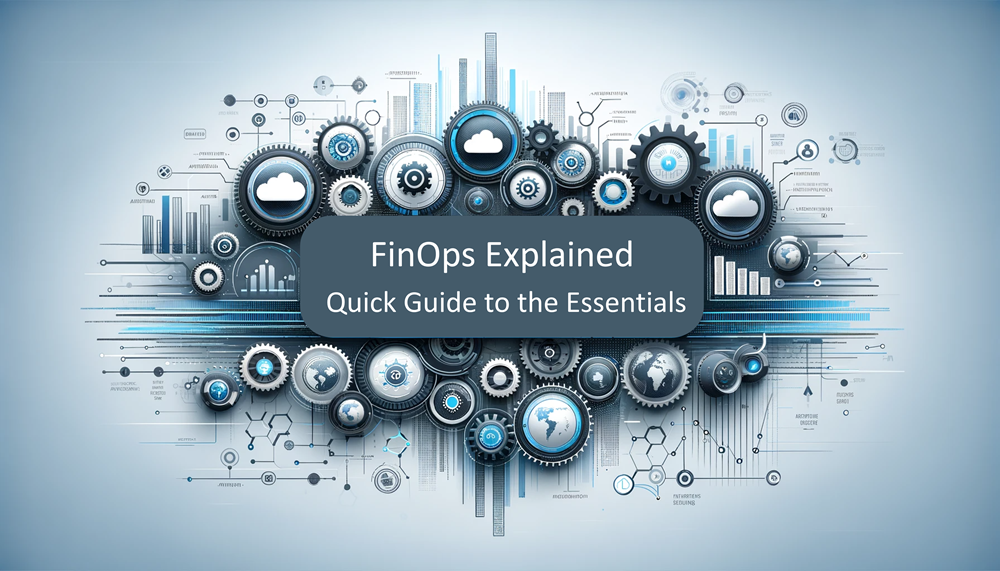
DevOps. DevSecOps. AIOps. NoOps. RevOps. FinOps.
It's challenging to stay abreast of these evolving terms. However, no need to fret.
Finopsly positions itself at the convergence of finance and operations uniting FinOps practitioners for collaboration, learning, and networking.
In this guide, we'll delve deeper into FinOps and elucidate its significance for you as a SaaS company dependent on cloud services and operating expenses financials.

FinOps Framework by FinOps Foundation
FinOps, as defined by Finops.org, refers to "FinOps" as an abbreviation for 'Cloud Financial Operations,' a burgeoning field within the broader scope of 'Cloud Financial Management' or 'Cloud Cost Management.'
The core of FinOps lies in instilling financial responsibility within the flexible spending structure of cloud services. This approach empowers various teams to balance considerations of speed, cost, and quality in their decision-making processes.
FinOps methodology extends beyond mere expenditure tracking. It facilitates a clear association of expenses with the individuals, products, and procedures responsible for them. This system allows for a detailed understanding of expenditure allocation – who receives resources, the reasoning behind it, and the allocation of your cloud budget.
Fundamentally, FinOps is structured around three core stages: Inform, Optimize, and Operate. These stages highlight the importance of cloud cost reporting, optimization of these costs, and the pursuit of ongoing enhancements. Here's a breakdown of each stage in the FinOps lifecycle:

The initial phase of FinOps is primarily about enhancing cost transparency. This heightened visibility allows for informed decisions regarding cost distribution, budgeting, and predicting future costs.
The level of visibility you achieve is influenced by your business objectives and the cloud cost management tools you utilize. Standard tools in platforms like AWS, Azure, and Google Cloud typically offer daily cost reports, which might not be frequent enough considering cloud billing often occurs on a secondly or hourly basis.
However, more comprehensive platforms like FINOPSLY provide hourly updates on cloud expenses, enabling quicker detection of anomalies and thus reducing the likelihood of budgetary excesses.
FINOPSLY also delivers detailed cost insights, including total and average costs, and more nuanced data like costs per customer, team, feature, deployment environment, etc. This detailed analysis helps in pinpointing specific cost drivers and addressing them effectively.
The 'Optimize' phase of FinOps is about enhancing the value derived from cloud investments in a cost-effective manner.
Optimizing cloud costs involves more than just cutting expenses; it's about maximizing returns without compromising on system performance, engineering speed, or user experience.
This involves implementing best practices in cloud cost management such as right-sizing (aligning cloud resources precisely with workload needs), minimizing idle resources, and utilizing discount programs like Reserved Instances and Savings Plans.
For instance, by understanding the costs associated with specific product features, decisions can be made to either modify their availability in pricing tiers or to evaluate their popularity and potential discontinuation to preserve profit margins.
The 'Operate' stage focuses on ongoing governance of cloud costs to avoid overspending while still achieving cloud computing goals.
It requires the involvement of all FinOps stakeholders, including finance, engineering, customers, and management. A common misconception is that FinOps is purely a finance function; in reality, it's a collaborative effort across the organization.
Improving collaboration between engineering and finance is crucial, especially since cloud engineering can be more prone to cost escalation compared to traditional on-premises solutions. Platforms that support Engineering-Led Optimization (ELO) are essential, as they empower engineers to make informed cost decisions using clear, timely, and actionable data.
The following principles serve as guiding standards for implementing FinOps in an organization:

FinOps Principles by FinOps Foundation
For SaaS companies, FinOps is not just about reducing expenses; it's about understanding the costs of running different business aspects and identifying levers for change to gain a competitive advantage.
How FinOps Provides Actionable Insights for SaaS Companies
In essence, the FinOps approach dissects cost data into detailed, actionable insights, providing a narrative that aligns with your business's specific context. This targeted analysis enables SaaS companies to make informed decisions that optimize both their financial performance and customer service
FinOps involves a collective effort, typically including representatives from executive, finance/IT procurement, engineering, ITAM, FinOps professionals, and product owners. Each role has its unique contributions and objectives, with the overall goal of implementing cloud cost optimization practices effectively.
Roles in the FinOps Team Structure and Their Responsibilities
Responsibilities: Implementing cloud cost optimization best practices in daily operations, gathering unit cost data, and driving cost budgeting and forecasting.
Objectives: Enhance cost efficiency and budget accuracy through optimized cloud resource utilization.
Responsibilities: Being cost-conscious in designing cloud architectures, making decisions that impact the organization's financial bottom line and competitiveness.
Objectives: Develop cost-effective technical solutions that deliver long-term cost savings while maintaining velocity, innovation, and quality.
Responsibilities: Delivering value to customers using cloud resources, ensuring competitive pricing (SaaS pricing), and maintaining healthy profit margins.
Objectives: Optimize the delivery of products or services to maximize value while managing cloud costs effectively.
Responsibilities: Optimizing resource utilization, minimizing waste, and improving return on investment related to IT assets.
Objectives: Streamline IT asset management processes to reduce costs and enhance resource efficiency.
Responsibilities: Ensuring that cloud investments align with the organization's overarching business goals and strategies.
Objectives: Oversee the alignment of cloud initiatives with the broader business strategy to drive growth and competitiveness.
Responsibilities: Ensuring that cloud technology delivers value to the business and provides a competitive advantage in the industry.
Objectives: Implement cloud solutions that align with the company's technology vision and support its competitive position.
Responsibilities: Helping stakeholders make sense of cloud usage costs, including Cloud Total Cost of Ownership (Cloud TCO).
Objectives: Provide financial insights and guidance to manage cloud costs effectively and optimize financial performance.
Responsibilities: Negotiating software license agreements, evaluating cloud providers and vendors, and ensuring the organization receives the best price-performance value.
Objectives: Secure cost-effective technology procurement deals and maximize value from IT investments.
Each role in the FinOps team structure plays a critical part in managing cloud costs, aligning technology investments with business goals, and optimizing resource utilization. Collaboration among these roles is essential for successful FinOps implementation and achieving cost-efficiency while delivering value to customers.
To implement FinOps, follow these steps:

Adopting FinOps: FinOps Foundation
To effectively implement FinOps and optimize cloud costs, consider the following principles and strategies:
Bring together a diverse team that includes stakeholders from various departments. A variety of perspectives ensures a comprehensive approach to cost management.
Consider inviting external experts to bolster your team's knowledge and skills. External consultants can provide valuable insights and best practices.
Promote the benefits of FinOps to specific teams or business units. Highlight how it can enhance efficiency, reduce costs, and align with organizational goals to gain buy-in and commitment.
Encourage early and frequent communication between engineering and finance teams. This alignment helps them understand each other's priorities and challenges, fostering collaboration.
Agree on which decisions should be shifted left to engineering. This empowers engineering teams to make timely decisions on architectural issues, preventing potential overspending due to delays.
Track unit costs such as cost per customer, cost per deployment, and cost per team. This measurement helps identify opportunities for optimization without compromising service delivery.
Promote practices that cultivate a cost-aware culture, such as right-sizing resources and terminating idle ones. Encourage cost-conscious behavior among team members.
Leverage user-friendly and robust FinOps tools to automate continuous monitoring and optimization. These tools help streamline cost management processes and provide real-time insights.
Implement tools that provide real-time visibility into cloud costs, allowing you to track expenses as they occur.
Use auto-scaling mechanisms to adjust resource capacity based on demand, minimizing over-provisioning and reducing costs during periods of low usage.
Employ automated anomaly detection algorithms to identify irregularities in cost patterns and trigger alerts for further investigation.
Create policies that automatically take actions based on predefined thresholds, such as stopping or resizing instances when costs exceed budgeted limits.
Set up automated budget alerts to notify teams when they approach or exceed their allocated budgets, enabling proactive cost control.
Utilize automated optimization tools that suggest resource right-sizing and termination of idle resources based on usage patterns.
Implement automated reporting and dashboards to provide stakeholders with clear, up-to-date insights into cost allocation and optimization progress.
Automate the allocation of cloud costs to specific projects, teams, or departments for accurate cost attribution.
By applying these principles and leveraging automation strategies, organizations can effectively implement FinOps practices, optimize cloud costs, and achieve cost-efficient cloud operations.